
Slope change
Water speed and direction change where a steep roof meets a low-slope section. The transition must move water without forcing it beneath either material.
Scottsdale roof service
Quest Roofing serves Scottsdale from its Queen Creek base and documents the full route around a roof concern: tile field, flat sections, wall connections, penetrations, flashing, drainage, finish details, and access. That record supports a repair or replacement decision tied to the roof in front of us.

Relevant services
A roof with more than one plane or material needs a scope that names each affected area and explains how the details between them will remain watertight.
Inspection focus
A material can perform normally in the middle of a roof plane while the connection to another slope, wall, curb, valley, or penetration creates the actual decision point.
Water speed and direction change where a steep roof meets a low-slope section. The transition must move water without forcing it beneath either material.
Tile, underlayment, coating, membrane, metal, and sealant have different roles. Photos should show which layer overlaps or terminates at the connection.
Sidewalls, headwalls, parapets, skylights, and equipment curbs depend on flashing geometry and compatible counterflashing, not surface sealant alone.
Access, staged materials, removed tile, landscaping, exterior finishes, and cleanup expectations should be addressed when they affect how approved work is performed.
Material and detail context
Tile Roofing Industry Alliance material emphasizes appropriate deck and underlayment flashing at penetrations so water can continue across the roof surface while the secondary barrier remains protected. GAF inspection guidance likewise calls attention to joints, vents, penetrations, and flashing. Together, those sources support documenting details rather than diagnosing from tile appearance alone.
On a flat section, the inspection adds coating continuity, drainage, scuppers, ponding clues, punctures, and previous repairs. The written proposal should identify which plane receives work and how the transition to an untouched plane will be handled. If the inspection cannot define a durable stopping point, that limitation should be discussed before approval.
Scottsdale Planning and Development publishes current home-improvement information. Property-specific rules may depend on the address and scope, so homeowners should confirm those questions with the city. Quest keeps the roofing proposal focused on observed conditions, the planned work area, protection, finish, and closeout expectations.
Read the Scottsdale flat-roof scupper leak guide for drainage, parapet, and repair-scope clues.
Read the Scottsdale roof valley leak guide for monsoon warning signs and repair-scope questions.
Scope options
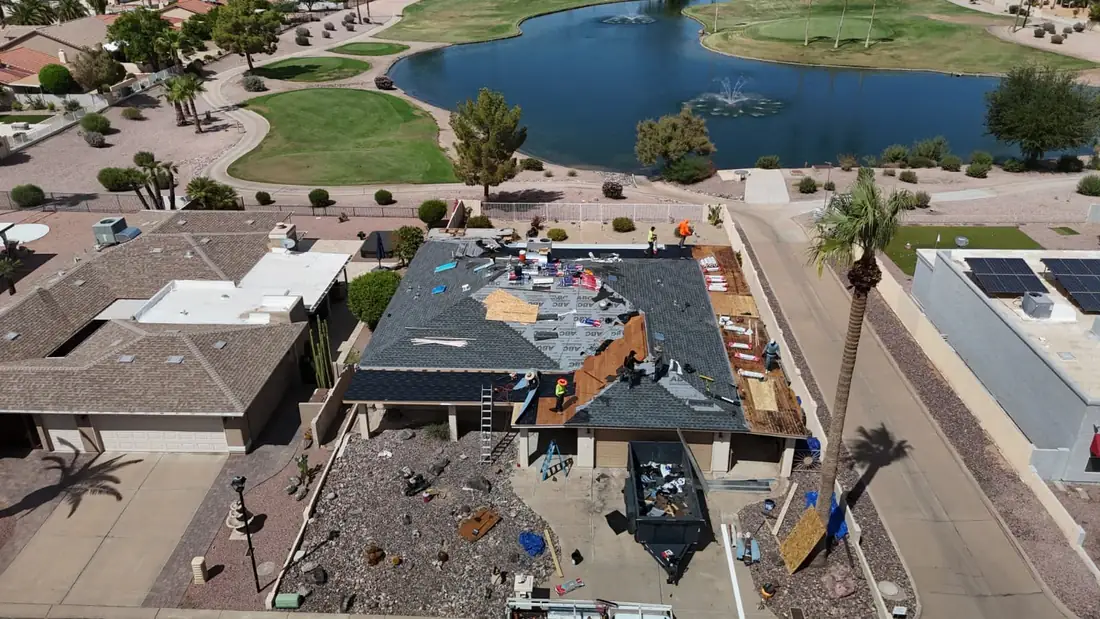
The recommendation should show how each roof plane, connection, and finish concern affects the proposed boundary.
Name tile, flat, foam, metal, patio, and other sections relevant to the concern so photographs and scope notes are easy to locate.
Document slope change, overlap, flashing, water direction, sealant, and adjacent condition before deciding that one material caused the leak.
The proposal can address access, material staging, protection, reusable tile, visible finish, debris control, and closeout photographs when relevant.
A repair or replacement boundary should terminate at a detail that can be made continuous and inspected, not at an arbitrary convenient line.
Three documented steps
Describe the symptom and identify every roof plane, wall, penetration, or prior repair that may connect to the affected area.
Quest creates photographs and notes for tile, flat sections, transitions, drainage, flashing, access, and finish considerations relevant to the proposal.
Review the written boundary, protection details, exclusions, city-verification questions, and closeout expectations before scheduling.
Read current Quest Roofing feedback, browse company project documentation, or compare the nearby Phoenix roofing service. These resources show Quest Roofing's company-wide process and provide useful nearby service context.
Straight answers
Yes. Quest serves Scottsdale from its Queen Creek base and provides documented inspection and written-scope options.
Changes in slope, material, flashing, and water direction can make transitions important to diagnosing a leak or planning work.
The proposal should identify relevant staging, access, protection, cleanup, and finish expectations for the approved project.
No. The inspection should show whether a localized detail can be repaired or whether surrounding system conditions justify a broader conversation.
Scottsdale Planning and Development publishes current home-improvement guidance and should be consulted for property-specific questions.